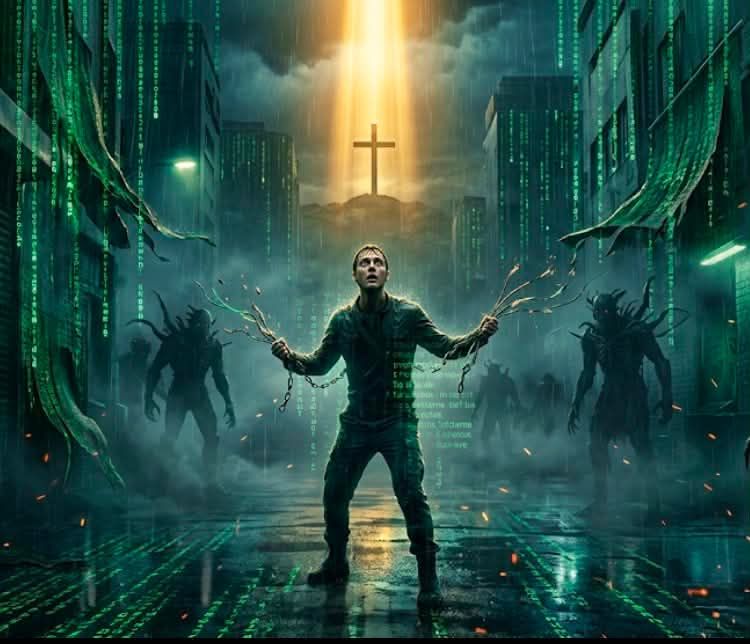
The idea that we might be living in a computer simulation has captured widespread attention in recent years. Prominent thinkers such as philosopher Nick Bostrom and technology leader Elon Musk have popularized this concept. Bostrom presented it in logical terms in his influential 2003 paper, arguing that if future civilizations develop the ability to create highly detailed simulations of their ancestors, then it is statistically probable that we are existing within one of those simulations rather than in the original base reality. Musk and others have echoed this view, drawing comparisons to video games, virtual reality, and rapid advances in computing power. Yet this modern hypothesis quietly revives ancient Gnostic teachings, which portrayed humans as trapped in a flawed material world crafted by a lesser god.
Centuries ago, in the period following the life of Jesus, Gnostic groups promoted a distinctive worldview. They asserted that the physical realm was not the creation of the ultimate, perfect God but rather the work of a lower entity known as the Demiurge, an imperfect architect who imprisoned divine spirit within corruptible bodies and the material order. According to their perspective, unseen ruling powers kept humanity in ignorance, and liberation required gnosis a profound inner awakening that would allow escape from this illusory prison and reunion with a higher spiritual realm. Gnostic texts often depicted ordinary existence as a deceptive stage or confining illusion.
In contemporary culture, the simulation hypothesis adopts a more scientific and philosophical tone. It arises from reasoned speculation about technology and probability, proposing that we might discern the constructed nature of reality through anomalies in physics or deeper insights into underlying code. Popular media has made these notions accessible to broader audiences. In The Matrix, the protagonist Neo uncovers that his entire environment is a sophisticated computer program controlled by machines; by choosing the “red pill,” he awakens, resists the system, and taps into an inner power. This narrative echoes Gnostic themes of breaking free from a false reality dominated by deceptive authorities. Similarly, Dark City follows a man confined in an ever-shifting urban landscape manipulated by mysterious beings who alter memories and identities for their experiments. His quest for truth mirrors the struggle to overcome external control. Through such stories, Gnostic ideas of illusion, entrapment, and personal enlightenment find vivid expression in today’s entertainment.
Nevertheless I’ve come to conclusion that both Gnostic doctrines and these modern interpretations share a concerning premise: that our world is fundamentally deceptive or imprisoning, with escape depending on specialized, hidden knowledge.
Scripture offers a profoundly different perspective. The Bible affirms that God created the material world as inherently good. Humanity consists of spirit, soul, and body, with the spirit designed for communion with the Creator, the soul encompassing mind, will, and emotions, and the body serving as the physical form. Sin disrupted this harmony, alienating the spirit from God and allowing the soul and flesh to dominate. Yet this does not indicate a flawed creation by a lesser deity or an inherent trap in matter. Instead, God addressed the core issue of sin and the fallen human nature through Jesus Christ.
The blood of Jesus provides cleansing from sin, while the cross brings death to the old self, enabling Christ to live within believers. We inhabit a real world impacted by Satan’s rebellion and human wrongdoing, not an illusion generated by inferior forces. The solution lies not in esoteric insights or doubts about coded existence but in straightforward faith in Christ recognizing that believers have died, been buried, and risen with Him to new life. By walking according to the Spirit rather than the soul or flesh, one experiences authentic freedom and daily victory.
Spiritual conflict remains a present reality. Satan acts as the genuine adversary, seeking to mislead and divert people from God. Concepts like the simulation hypothesis or Gnostic elements, even when dramatized in influential movies, can function as instruments of such deception. They portray the material world as inherently evil or unreal, contradicting the biblical declaration that God cherishes His creation and will ultimately restore it, including the resurrection of our bodies. Authentic understanding flows from the Holy Spirit illuminating the Scriptures, not from philosophical speculation or subjective experiences.
Reflecting on these connections encourages grounded discernment. One should avoid becoming absorbed in speculations about fabricated realities or cinematic illusions, no matter how engaging they appear. Rather, believers are called to center on the cross, allow Christ to express His life through them, and permit the spirit to govern the soul and body. This constitutes the genuine Christian experience straightforward yet profoundly effective and authentic. It involves not fleeing from the material realm but permitting God’s life to permeate every aspect of existence within the world He sovereignly formed.
Ultimately, while these contemporary notions may appear intellectually sophisticated, they overlook the central message of the gospel. Scripture directs us to the foundational realities: God as the true Creator, Jesus Christ as the sole path to liberation, and vibrant daily fellowship with Him as the source of meaningful life.


You must be logged in to post a comment.