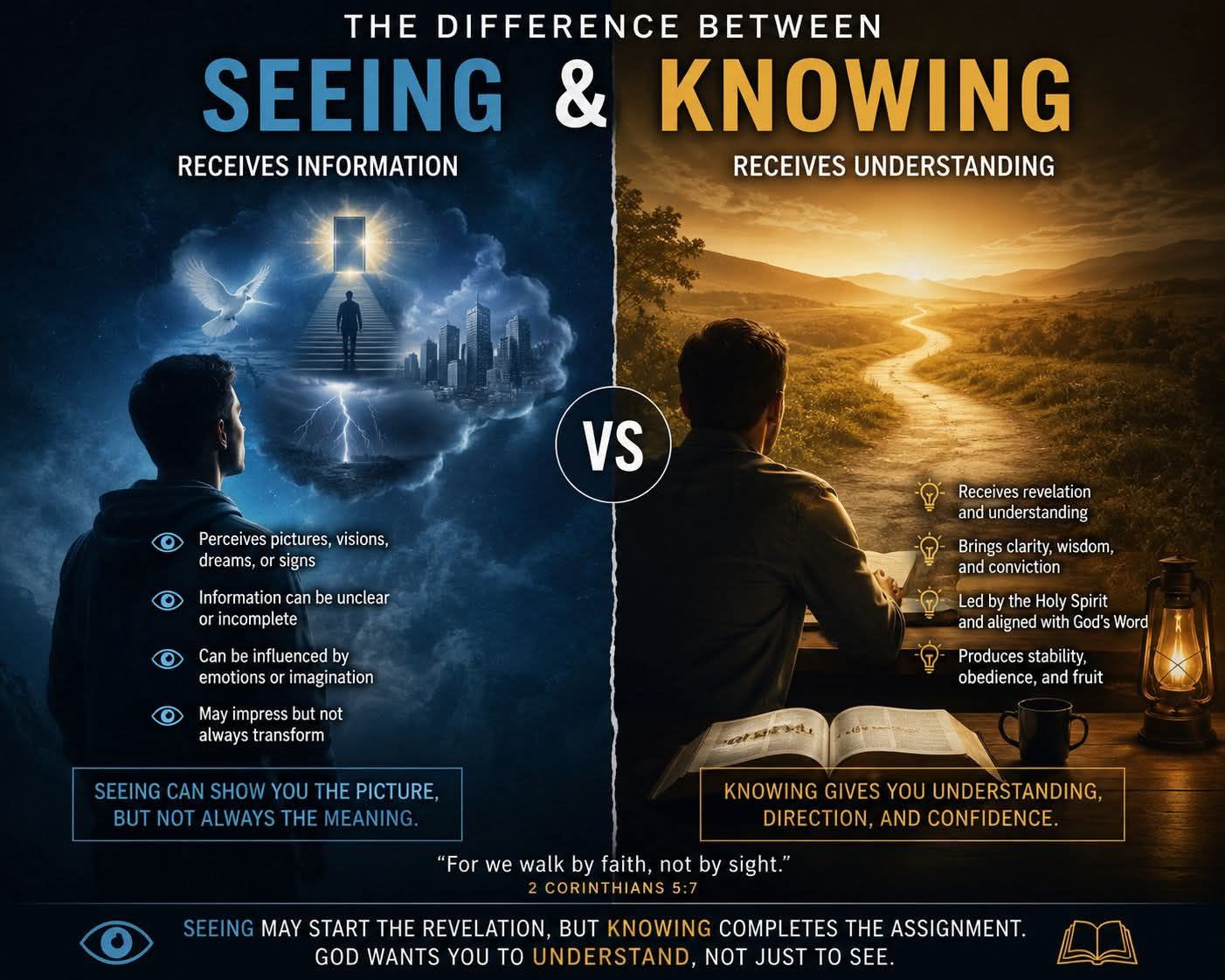
The Difference Between Seeing and Knowing
“For we walk by faith, not by sight.” — 2 Corinthians 5:7
One of the most misunderstood aspects of spiritual growth is the difference between seeing and knowing. Many believers assume that spiritual maturity is measured by visions, dreams, and supernatural encounters. While God can communicate through these means, spiritual sight and spiritual knowledge are not always the same thing.
A person may see something spiritually and still misunderstand its meaning. Another person may not see a vision at all but possess deep spiritual understanding through revelation from God.
God is not merely interested in giving His people experiences; He desires to give them understanding.
1. Seeing Reveals Information; Knowing Reveals Understanding
Seeing is the ability to perceive something, whether naturally or spiritually. Knowing is the understanding of what has been perceived.
The prophet may see a symbol, but wisdom is needed to interpret it correctly. Spiritual encounters without understanding can create confusion.
Daniel 12:8
“And I heard, but I understood not.”
Daniel heard the revelation but lacked immediate understanding. This demonstrates that receiving information and understanding it are two different things.
2. Spiritual Sight Can Be Partial
Many believers place great value on what they see in visions and dreams, but spiritual sight is often given in fragments.
God may reveal a picture without revealing the entire story. He may show an event without revealing its timing.
This is why humility is essential. What is seen must be submitted to God’s wisdom for proper interpretation.
3. Knowing Comes Through Revelation
Knowing is a deeper work of the Holy Spirit.
There are moments when believers simply know something in their spirit without having seen a vision or heard an audible voice. This inner witness often comes through revelation and spiritual discernment.
1 Corinthians 2:12
“That we might know the things that are freely given to us of God.”
The Holy Spirit does not merely reveal images; He imparts understanding.
4. Seeing Can Impress; Knowing Produces Stability
Many people are fascinated by supernatural experiences, yet experiences alone do not guarantee maturity.
Spiritual knowing produces conviction, wisdom, and stability. It allows believers to remain confident even when they do not have visible signs.
A mature believer is not dependent on constant visions because they have learned to trust God’s voice and His Word.
5. The Highest Goal Is Understanding
Throughout Scripture, God consistently emphasized understanding.
When Solomon sought wisdom, he did not ask for visions or supernatural experiences. He asked for understanding, and God honored his request.
Proverbs 4:7
“Wisdom is the principal thing; therefore get wisdom: and with all thy getting get understanding.”
The goal of revelation is not merely to see spiritual things but to understand God’s heart and purposes.
Conclusion
Seeing and knowing are not the same. Seeing may reveal a picture, but knowing reveals the meaning. Seeing can provide information, but knowing produces understanding. Seeing may capture your attention, but knowing transforms your life.
The most mature believers are not necessarily those who see the most; they are those who understand what God is saying and walk faithfully in it.


You must be logged in to post a comment.