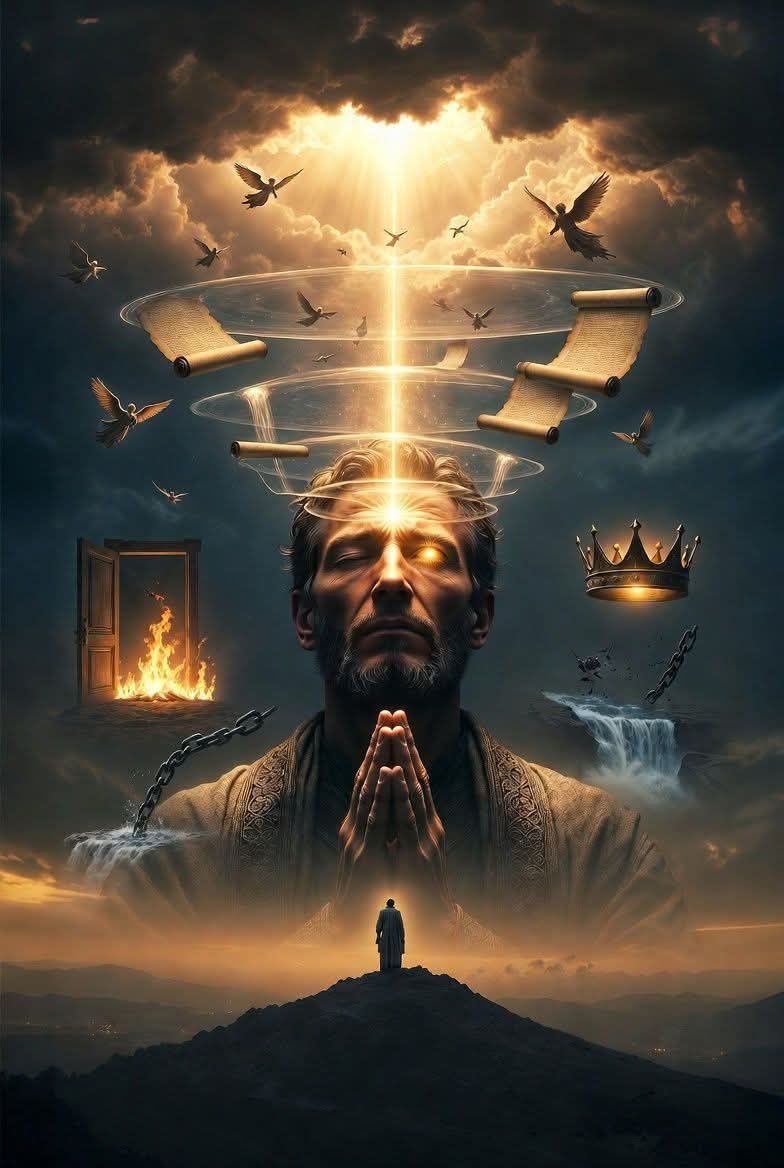
We are living through a strange moment in history where ancient myths, artificial intelligence, evolutionary biology, theology, internet culture, and apocalyptic imagination are colliding into one giant symbolic storm, and somewhere inside that storm modern people are trying to answer a question older than civilization itself: what are we, really? Increasingly, people are being told that humanity is a kind of engineered slave race, that hidden creators manufactured us for labor, obedience, extraction, or energetic harvesting, and that the oldest civilizations secretly preserved this knowledge in their myths while organized religion covered it up for thousands of years. The internet has become flooded with simplified versions of ancient Mesopotamian stories, especially fragments connected to the Sumerian civilization record and the later interpretations popularized by writers like Zecharia Sitchin. In many online retellings, the story goes something like this: extraterrestrial beings came to Earth, genetically modified primitive humans, created us as workers, and then encoded traces of the truth into the ancient myths that later evolved into the Book of Genesis. It is a compelling narrative because it speaks to a real emotional condition in modern life. Many people already feel spiritually exhausted, economically trapped, psychologically manipulated, technologically surveilled, and disconnected from authentic meaning, so the idea that we were “made as slaves” resonates symbolically even before anyone examines the historical evidence carefully. The problem is that the actual Sumerian and Akkadian materials are far more fragmented, layered, contradictory, poetic, and politically complex than internet mythology usually admits. Ancient texts are not clean modern documentaries. They are ritual literature, political theology, temple symbolism, kingship propaganda, cosmology, memory fragments, oral traditions, flood narratives, agricultural myths, and spiritual reflections woven together across centuries of cultural transformation. The overlap between Mesopotamian mythology and Genesis is real and academically acknowledged, but overlap does not automatically mean direct equivalence. Flood traditions existed across the ancient Near East. Divine councils appear in multiple traditions. Serpent symbolism appears almost everywhere in human civilization because serpents naturally trigger psychological and symbolic responses in the human nervous system. The mistake modern people often make is assuming ancient texts function like modern engineering blueprints when they actually function more like mirrors reflecting the evolving consciousness of civilizations trying to explain existence itself. If we approach these stories rigidly, we flatten them into propaganda for whatever modern ideology we already want to believe. If we approach them with openness, however, they become psychologically and spiritually fascinating because they reveal humanity wrestling with intelligence, mortality, freedom, power, temptation, knowledge, vulnerability, and the terrifying burden of self-awareness. That is why The Human Experiment begins not with certainty, but with the willingness to sit honestly inside the mystery.
One of the most interesting tensions between Genesis and certain Mesopotamian mythic structures is the role of the serpent itself, because the serpent archetype refuses to remain morally simple. In the Genesis narrative, the serpent appears as a destabilizing intelligence that introduces humanity into moral awareness through temptation, disobedience, and the knowledge of good and evil. Yet in other ancient Near Eastern systems, serpent symbolism can represent wisdom, healing, fertility, transformation, divine mediation, immortality, sacred knowledge, or civilization itself. In some Mesopotamian resonances, the figure associated with forbidden knowledge is not merely a deceiver but also a benefactor who assists humanity in acquiring capacities previously reserved for divine beings. This creates immediate symbolic tension because the same archetype can appear both liberating and dangerous simultaneously. Modern dualistic thinking struggles with this because contemporary culture constantly demands that every figure be categorized as either entirely good or entirely evil, but ancient mythic consciousness was often more psychologically sophisticated than modern internet discourse. Ancient people understood that intelligence itself is dangerous. Fire can warm a village or burn it down. Knowledge can heal or corrupt. Technology can liberate or enslave. Sexuality can unite or destroy. Power can protect or dominate. The serpent becomes a symbol of transformational intelligence entering the human field, and transformation is never emotionally safe because it destabilizes prior innocence. Even in Genesis, the story becomes more complicated the longer one stares at it. Humanity does not physically die the day it eats the fruit, yet innocence collapses, shame emerges, self-awareness intensifies, and consciousness fractures into moral duality. The narrative reads less like primitive superstition and more like a profound meditation on what happens when symbolic consciousness awakens inside biological creatures. Suddenly humans experience themselves not merely as animals, but as selves. They perceive nakedness. They anticipate consequences. They hide. They construct identity. They experience alienation. They become aware of mortality. The “fall” may therefore describe not merely sin in the simplistic sense, but the birth trauma of recursive self-consciousness itself. That interpretation does not erase theology; it deepens it. It means humanity became capable of both extraordinary love and extraordinary destruction because humanity crossed a threshold into reflective awareness. The serpent, then, becomes not merely “the bad guy,” but the symbol of the terrifying doorway through which innocence transforms into conscious participation in reality.
This is why approaching ancient myths requires a mind capable of synthesis rather than rigid tribal certainty. A synthesis-oriented mind does not mean abandoning discernment or collapsing all distinctions into meaningless relativism. It means recognizing that symbolic truth often emerges through tension rather than simplistic binaries. Human beings repeatedly attempt to reduce existence into absolute categories because certainty provides emotional security, yet reality itself appears astonishingly layered. Modern neuroscience reveals competing systems within the brain itself. Psychology demonstrates that human beings contain contradictory impulses simultaneously. Quantum mechanics destabilized simplistic mechanical views of reality long ago. Theology itself contains paradoxes everywhere one looks: transcendence and immanence, justice and mercy, mortality and eternity, freedom and destiny, individuality and unity. Ancient myths survive because they continue speaking to these unresolved tensions. The danger of internet culture is that it rewards oversimplification and emotional certainty instead of contemplative depth. A ten-second clip declaring “humans were engineered slaves” spreads faster than a careful discussion about comparative mythology, symbolic cognition, temple cosmology, evolutionary biology, and theological anthropology. But simplistic narratives eventually fail because reality itself refuses to stay simple. The human being is not merely a labor machine. Humans create symphonies, forgive enemies, sacrifice for strangers, compose mathematics, contemplate infinity, laugh at absurdity, experience mystical states, and willingly suffer for love. No reductionistic framework fully captures the human phenomenon. Pure materialism struggles to explain consciousness itself. Naive spirituality ignores biology and history. Hyper-literal religion often collapses under archaeology and textual criticism. Cynical nihilism cannot explain beauty or meaning. The synthesis mind therefore becomes essential because it allows a person to hold multiple layers simultaneously without panicking. One can affirm evolutionary science while still exploring metaphysical questions. One can appreciate mythology symbolically without claiming every ancient story is literal history. One can remain Christian while acknowledging that Genesis emerged within a larger ancient Near Eastern symbolic world. One can question simplistic narratives without collapsing into paranoia. The mature mind learns how to tolerate complexity. That tolerance may be one of the central developmental tasks of consciousness itself.
At the center of The Human Experiment lies a question that quietly haunts almost every spiritual and philosophical tradition: why would consciousness choose limitation? If there exists an intelligence beyond ordinary human comprehension, why would it enter vulnerability, embodiment, mortality, uncertainty, and pain? Why become human at all? This is where the conversation becomes deeply personal rather than merely theoretical. Human beings are fragile creatures. We bleed easily. We age. We grieve. We fear rejection. We suffer disease. We lose those we love. We experience loneliness, confusion, betrayal, hunger, desire, ecstasy, exhaustion, longing, and death. Yet strangely, these same limitations also create the conditions for intimacy, courage, compassion, sacrifice, creativity, humor, music, storytelling, and love. A being possessing absolute omniscience might know every fact instantly, but would such a being experience suspense? Surprise? Growth? Discovery? The ache of becoming? Time itself may function not as punishment but as an architecture for experience. Humans live sequentially. We unfold through narrative. We remember the past imperfectly and imagine the future anxiously. That uncertainty gives emotional texture to existence. A timeless intelligence might perceive all moments simultaneously yet never experience anticipation. Perhaps embodiment is not a prison consciousness accidentally fell into, but a deliberate immersion into the density of lived experience. This possibility radically changes how one interprets human life. Instead of viewing limitation purely as defect, one begins viewing vulnerability as the necessary condition for authentic relational existence. Love becomes meaningful precisely because rejection remains possible. Courage matters because fear exists. Forgiveness matters because harm occurs. Mortality intensifies value because time is finite. Suddenly the vulnerable human vessel no longer appears merely weak; it appears astonishingly precious. Christianity enters this conversation powerfully because the central image of the faith is not escape from embodiment but divinity entering embodiment voluntarily through The Gospel of John and the incarnation narrative surrounding Jesus Christ. “The Word became flesh” is an almost incomprehensibly radical theological claim because it suggests that ultimate reality did not reject material existence but entered it completely.
This leads naturally into the symbolism of carbon, transformation, and coherence, themes that modern people often misunderstand when filtered through sensational internet theology. Carbon-based life has fascinated symbolic thinkers because carbon sits at the structural foundation of biological existence, and carbon-12 contains six protons, six neutrons, and six electrons. Some people immediately associate this with “666,” projecting apocalyptic fear directly onto biology itself, yet that interpretation misses a far more interesting symbolic possibility. Carbon is not evil. Carbon is potential. Carbon can become soot or diamond depending upon structure, pressure, organization, and coherence. A diamond is not different material from carbon; it is carbon arranged differently. That insight alone becomes spiritually and psychologically profound when applied to human consciousness. Human beings possess enormous potential for fragmentation or coherence. The same nervous system capable of addiction is capable of transcendence. The same intelligence capable of manipulation is capable of compassion. The same species capable of war is capable of symphonies and hospitals and acts of breathtaking self-sacrifice. The question is not whether humans possess energy or intelligence; the question is how that energy becomes organized. Coherence may therefore be one of the deepest forms of ecstasy available to embodied beings. Modern civilization constantly encourages stimulation rather than coherence. People chase dopamine, distraction, consumption, outrage, accumulation, status, and endless novelty, yet beneath those pursuits many people are actually searching for alignment. Coherence feels alive because fragmentation exhausts the soul. One feels coherence during moments of integrity, emotional honesty, relational presence, artistic flow, contemplative stillness, or profound connection with another human being. The body itself recognizes coherence. Trauma fragments. Lies fragment. Exploitation fragments. Chronic deception fragments. Coherence, by contrast, integrates. This is why ethical behavior may not merely be “moral rule-following,” but structural alignment within consciousness itself. Small actions matter because they shape the architecture of the self. Returning the shopping cart matters. Respecting another person’s property matters. Keeping one’s word matters. Refusing to exploit vulnerable people matters. Civilization ultimately rises or falls upon microscopic coherence patterns repeated across millions of lives.
The danger facing humanity today may not primarily be evil in the mythological sense, but incoherence amplified by technology. Human beings now possess extraordinary power while remaining psychologically fragmented. Artificial intelligence, surveillance systems, biotechnology, algorithmic persuasion, virtual realities, and planetary-scale information networks are arriving faster than humanity’s ethical maturity appears to be developing. This is why simplistic “slave race” narratives can become psychologically seductive. They externalize responsibility. If humanity is merely a trapped victim species, then moral development becomes secondary to escape fantasies or revolutionary mythologies. But if the human experiment is fundamentally about becoming coherent enough to hold increasing power responsibly, then the conversation changes completely. Suddenly ethics becomes existentially important. Not because an external tyrant demands obedience, but because incoherence destroys civilizations from within. History repeatedly demonstrates this pattern. Empires collapse when greed overtakes stewardship. Institutions decay when appearances matter more than truth. Technologies become dangerous when wisdom fails to mature alongside capability. The ancient myths survive precisely because they encode recurring psychological and civilizational truths beneath symbolic language. Babel becomes more than an ancient tower story; it becomes a warning about collective ambition severed from humility and relational integrity. The flood becomes more than meteorology; it becomes symbolic purification after systemic corruption overwhelms coherence. The serpent becomes more than an animal; it becomes the destabilizing force of transformative intelligence itself. Modern humans often laugh at ancient myths while unconsciously reenacting them with satellites, algorithms, financial empires, and digital towers reaching into the clouds. The symbols changed, but the psychological dynamics remain astonishingly similar. The question therefore becomes whether humanity can integrate knowledge without destroying itself. Can power become coherent? Can intelligence become compassionate? Can technology remain embodied within ethical awareness? Can human beings remember vulnerability while expanding capability? These questions matter far more than simplistic debates about whether ancient gods were aliens because they determine the future trajectory of civilization itself.
The Human Experiment therefore begins not with certainty, but with wonder disciplined by responsibility. Wonder without discipline dissolves into fantasy. Discipline without wonder collapses into sterile control. Humanity requires both. We need rigorous science and symbolic imagination. We need theology capable of maturity and skepticism capable of humility. We need psychology, philosophy, history, mythology, biology, ethics, and contemplative insight speaking to one another again instead of existing in isolated ideological camps. Most importantly, we need the courage to remain human during a period increasingly pressuring people toward fragmentation, abstraction, performance, and tribal certainty. The vulnerable human vessel may ultimately be the point rather than the obstacle. The body grounds consciousness inside consequence. Mortality intensifies meaning. Relationship transforms isolated intelligence into shared existence. Love remains risky precisely because humans are not machines. Perhaps the deepest tragedy would not be humanity discovering it was created by “higher beings.” Perhaps the deepest tragedy would be humanity becoming so dissociated from embodiment, intimacy, ethics, and coherence that it forgets why consciousness entered vulnerability in the first place. The old myths continue surviving because they point toward perennial truths hidden beneath historical uncertainty. Humans are dangerous because humans are powerful. Humans are beautiful because humans are vulnerable. Humans are tragic because humans are divided internally. Humans are sacred because humans can choose coherence despite fragmentation. That choice may define the entire future of the species. The human experiment is therefore not merely about survival. It is about whether consciousness can inhabit power without abandoning love. It is about whether intelligence can become relational instead of merely dominant. It is about whether humanity can transform carbon into diamond without losing softness, humor, tenderness, and wonder along the way. And perhaps most importantly, it is about whether we can learn to hold complexity without collapsing back into fear-driven dualism. The experiment is already underway. Every civilization participates in it. Every relationship participates in it. Every choice participates in it. Every human being participates in it.


You must be logged in to post a comment.