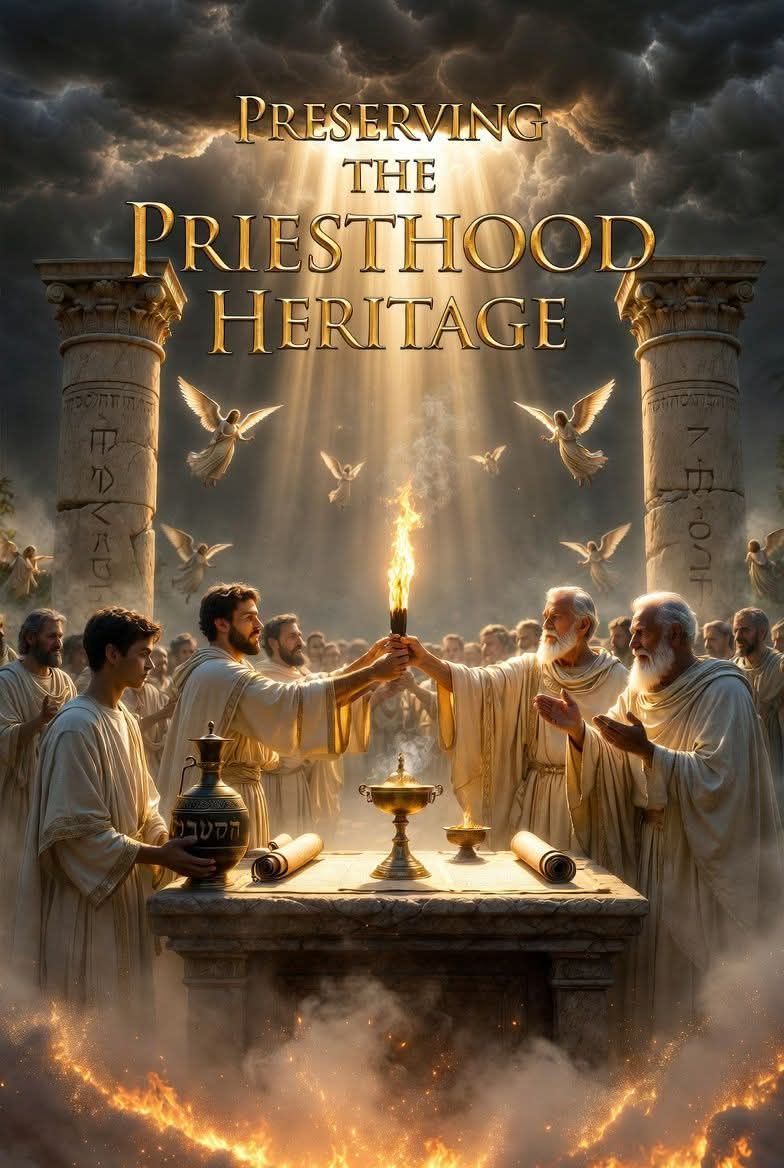
The priesthood heritage is not merely a title passed through generations — it is the preservation of divine fire, sacred order, and spiritual responsibility.
To preserve priesthood heritage means to guard what heaven entrusted to men and women who stand between God and people. It is the call to keep the altar burning when generations grow cold, to maintain purity when compromise becomes common, and to carry ancient truths without corruption.
In scripture, the priesthood was preserved through consecration, obedience, and separation unto God. The sons of Aaron were entrusted with maintaining the fire upon the altar continually (Book of Leviticus 6:13). That fire represented God’s presence, and allowing it to die meant neglecting covenant responsibility.
Preserving priesthood heritage requires:
1. Guarding the Sacred Fire
Every generation must protect the flame of intimacy with God. Prayer, devotion, and consecration are the oil that keeps it burning.
2. Honoring Ancient Foundations
True spiritual heritage is not reinvented; it is stewarded. The patterns of holiness, reverence, and obedience established by those who walked deeply with God must be preserved.
3. Passing Down Spiritual Wisdom
Priestly heritage survives when revelation is transferred. What one generation learns in secret must become instruction for the next.
4. Refusing Contamination
The greatest threat to priesthood heritage is mixture — blending what is holy with what is profane. Preservation demands discernment.
5. Living as Custodians, Not Owners
The priesthood was never possession; it was stewardship. What is inherited must be guarded and delivered stronger to the next generation.
Spiritually, preserving priesthood heritage means becoming a living altar — a vessel through whom divine patterns remain visible in a fading age.
A generation that preserves priestly heritage does not merely remember the ancient fire; it becomes the reason it still burns.
The order of priesthood!
The “order of priesthood” refers to the divine structure and pattern by which spiritual authority, service, and mediation before God are established. In Scripture, it is not merely a title or role, but an arrangement of calling,
consecration, and responsibility.
At its core, priesthood represents man standing between God and people—not as superiority, but as stewardship. It carries the responsibility of representation: to carry divine instruction, maintain purity of heart, and serve as a channel of truth, mercy, and intercession.
1. Priesthood is rooted in divine calling
No one truly enters priesthood by ambition. It is established by calling and consecration. In biblical pattern, God sets apart individuals or lineages for specific spiritual service. This highlights that priesthood is not self-assigned; it is received through divine appointment and alignment.
2. Priesthood is structured in order, not chaos
The “order” of priesthood implies alignment, hierarchy of function, and spiritual governance. Different roles exist—high priestly responsibility, temple service, teaching of the law, and intercession—but all operate under divine instruction, not personal preference.
A key idea here is this: when priesthood loses order, spiritual authority becomes confusion instead of clarity.
3. Priesthood requires consecration
Those who serve in priestly capacity are called to separation—not from humanity, but from defilement, distraction, and moral disorder. Consecration means being set apart in lifestyle, thought, and intention so that spiritual service is not contaminated by personal corruption.
4. Priesthood is service, not status
True priesthood is not about elevation but responsibility. It involves:
Interceding for others
Teaching truth
Preserving spiritual order
Representing divine values in human spaces
When priesthood becomes status-driven, it loses its essence.
5. A deeper fulfillment in the New Covenant
In the New Testament perspective, priesthood expands beyond a select group into a spiritual identity: a “royal priesthood,” meaning those who live in alignment with God carry priestly responsibility in their conduct, influence, and intercession.
In summary
The order of priesthood is the divine arrangement of calling, consecration, and service through which spiritual responsibility is carried in alignment with God’s will. It is structured, sacred, and deeply rooted in purity, obedience, and stewardship.


You must be logged in to post a comment.