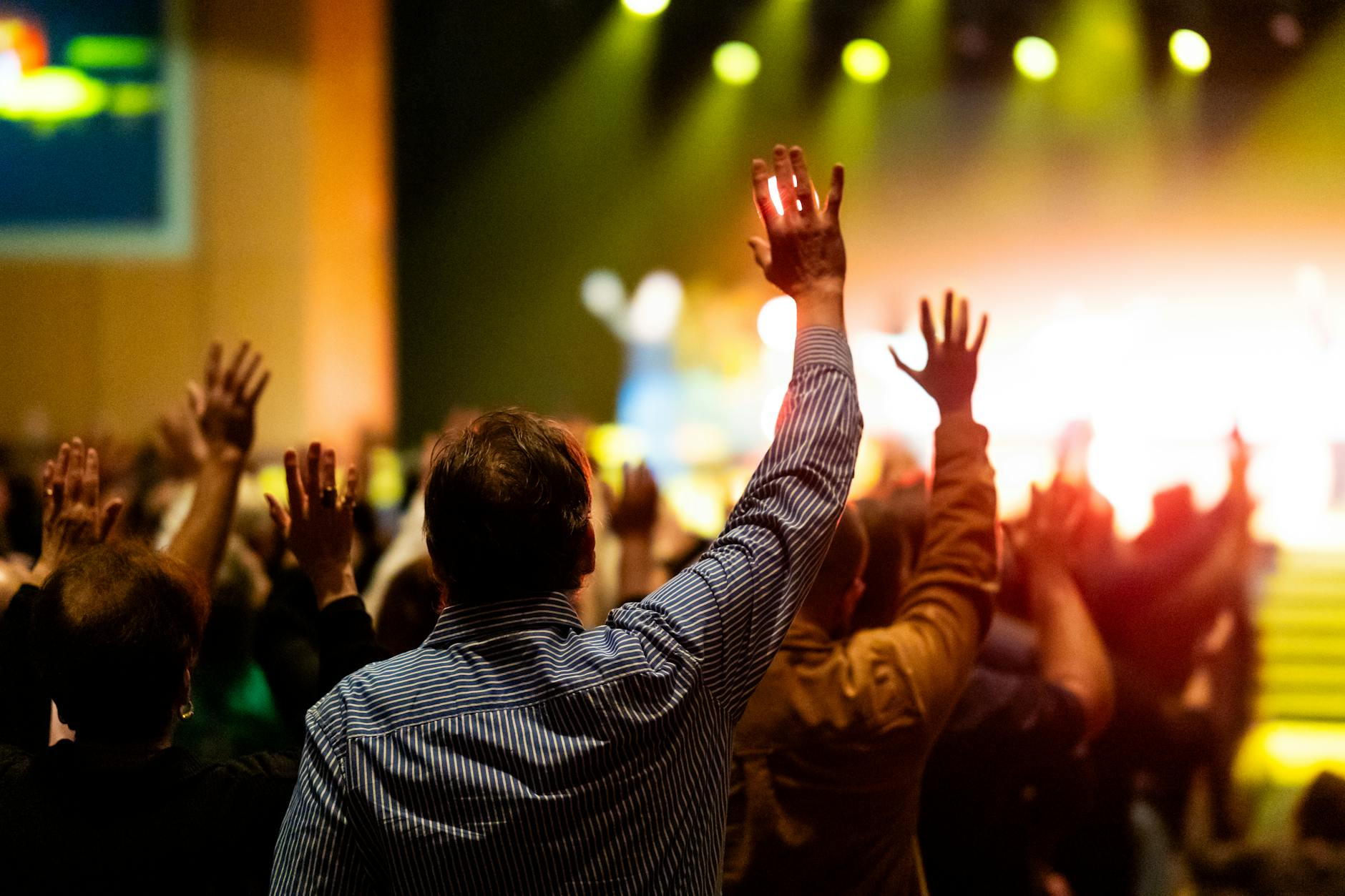
People assume the word Pentecostal refers to a denomination. Historically, that is not accurate.
At its core, Pentecostal was never meant to describe loyalty to an organization. It was used to identify believers who embraced the same supernatural experience that occurred in Acts 2 on the Day of Pentecost.
They were called Pentecostal because they experienced Acts 2. They obeyed Acts 2:38, were born again of water and Spirit, entered God’s Kingdom, His covenant, and received salvation the same way the 3,000 did on the Day of Pentecost.
Acts 2:4 And they were all filled with the Holy Ghost, and began to speak with other tongues, as the Spirit gave them utterance.
Acts 2:39 For the promise is unto you, and to your children, and to all that are afar off, even as many as the Lord our God shall call.
When revival movements emerged in the late 1800s and early 1900s, believers who experienced speaking in tongues, divine healing, spiritual gifts, and supernatural manifestations were often labeled Pentecostals because critics recognized that they were pointing back to Pentecost.
The name stuck Pentecostal!
𝗧𝗛𝗘 𝗘𝗔𝗥𝗟𝗬 𝗣𝗘𝗡𝗧𝗘𝗖𝗢𝗦𝗧𝗔𝗟 𝗠𝗢𝗩𝗘𝗠𝗘𝗡𝗧 𝗪𝗔𝗦 𝗥𝗔𝗗𝗜𝗖𝗔𝗟𝗟𝗬 𝗗𝗜𝗩𝗘𝗥𝗦𝗘
One of the most remarkable realities of early Pentecostal revival was that it looked far more like the book of Acts than much of organized religion at the time.
During the early 1900s America was deeply segregated.
Black churches stayed separate from white churches. Women were heavily restricted in leadership. Immigrants often worshipped in isolated communities.
Economic classes rarely mixed.
Yet at the Azusa Street Revival revival people from radically different racial, ethnic, economic, and cultural backgrounds worshipped together.
Black believers.
White believers.
Hispanic believers.
Immigrants.
The poor.
The wealthy.
Men and women.
People from multiple nations.
They prayed together, worshipped together, and sought the Holy Ghost together.
That was considered scandalous during that era.
Even secular newspapers mocked the interracial worship services because society could not comprehend what was happening.
The Los Angeles Times famously criticized the revival in racialized terms while mocking the worship practices.
But what critics failed to understand was that revival was producing what scripture had already declared.
Galatians 3:28 There is neither Jew nor Greek, there is neither bond nor free, there is neither male nor female: for ye are all one in Christ Jesus.
Colossians 3:11 Where there is neither Greek nor Jew, circumcision nor uncircumcision, Barbarian, Scythian, bond nor free: but Christ is all, and in all.
The Holy Ghost was breaking barriers that religion and culture often reinforced.
That does not mean early Pentecostal history was perfect.
Sadly, racial divisions later re-emerged as some leaders submitted to cultural pressures and segregation.
That led to denominational splits that should have never happened.
But the earliest revival moments revealed what the Kingdom of God looks like when man-made walls begin to fall.
The Spirit was moving across lines that religion, politics, and culture tried to maintain.
𝗛𝗢𝗪 𝗣𝗘𝗡𝗧𝗘𝗖𝗢𝗦𝗧𝗔𝗟 𝗗𝗘𝗡𝗢𝗠𝗜𝗡𝗔𝗧𝗜𝗢𝗡𝗦 𝗙𝗢𝗥𝗠𝗘𝗗
As revival spread rapidly, organizational structures eventually formed.
This was partly practical.
Missionaries needed support.
Churches needed accountability.
Doctrinal statements were being developed.
Ministers needed networks.
As revival expanded, several major Pentecostal organizations emerged.
Church of God in Christ became one of the earliest and most influential Pentecostal bodies under the leadership of Charles Harrison Mason after he embraced the Azusa revival experience.
Assemblies of God USA formed in 1914 as ministers gathered to organize missions efforts and doctrinal cooperation.
The International Church of the Foursquare Gospel emerged through the ministry of Aimee Semple McPherson.
Later, Oneness Pentecostal organizations emerged after deeper revelation and doctrinal disputes concerning the Godhead and baptismal formula.
This included groups such as the United Pentecostal Church International and other Apostolic movements that emphasized baptism in Jesus’ name and the absolute oneness of God.
Some organizational growth helped spread missions.
Some divisions reflected genuine doctrinal convictions.
Others reflected human pride, race issues, and institutional struggles that often follow revival movements.
That is the tension of church history.
God moves powerfully.
People organize what God is doing.
Sometimes organization helps preserve truth.
Sometimes organization slowly replaces revival fire with institutional maintenance.
(I address this in detail at the end)
𝗛𝗢𝗪 𝗜𝗧 𝗦𝗣𝗥𝗘𝗔𝗗 𝗔𝗖𝗥𝗢𝗦𝗦 𝗧𝗛𝗘 𝗪𝗢𝗥𝗟𝗗
From Azusa Street, missionaries quickly carried Pentecostal revival globally as God directed and sent them.
They traveled to Latin America.
Africa.
Europe.
India.
China.
The Philippines.
South Korea.
The Caribbean.
Revival spread through missionary networks, tent revivals, printed newspapers, personal testimonies, radio broadcasts, healing campaigns, television ministries, and now digital platforms.
Today some of the fastest-growing Spirit filled movements are found in Africa, Latin America, Asia, and underground house churches across restricted nations.
What began with 120 in an upper room continues to move through villages, cities, homes, churches, storefronts, prison ministries, mission fields, and digital platforms across the earth.
Acts 1:8 But ye shall receive power, after that the Holy Ghost is come upon you: and ye shall be witnesses unto me both in Jerusalem, and in all Judaea, and in Samaria, and unto the uttermost part of the earth.
That verse is still unfolding exactly as God designed and equipped people to do.
The upper room was never meant to be a museum.
It was the beginning of global Kingdom expansion through the power of the Holy Ghost so, Acts 2 just continued from Pentecost till today and despite it continued resistance by the religious denominational world, it will continue until His return. Pentecost is for you today.
Over time, denominations formed around that belief, but the original identity was tied to an experience, not an institution.
It was a declaration that said:
God is still pouring out His Spirit. People are still receiving the Holy Ghost and speaking in tongues. The gifts of the Spirit are still in operation. Acts 2 did not expire with history. It continues wherever people respond to God in faith and obedience.
In many ways, Pentecostal simply became shorthand for people who refused to believe that God stopped doing what He clearly did in the book of Acts.
The deeper question was never what label people use.
The deeper question is this:
Have you received the same Holy Ghost they received in Acts 2?
Acts 19:2 Have ye received the Holy Ghost since ye believed?
𝗔 𝗪𝗢𝗥𝗗 𝗔𝗕𝗢𝗨𝗧 “𝗗𝗘𝗡𝗢𝗠𝗜𝗡𝗔𝗧𝗜𝗢𝗡”
Sometimes organization helps preserve truth.
Sometimes organization slowly replaces revival fire with institutional maintenance.
Church history repeatedly shows how that happens.
Movements born in prayer rooms eventually build headquarters. Movements born through fasting eventually build financial systems. Movements born through radical surrender eventually build platforms. Movements born through sacrifice eventually build brands.
None of those things are automatically sinful.
Administration matters.
Accountability matters.
Stewardship matters.
The danger begins when the structure starts competing with the Spirit that birthed it.
The early church was built around the direct government of Christ through His Spirit.
Ephesians 4:11 And he gave some, apostles; and some, prophets; and some, evangelists; and some, pastors and teachers.
1 Corinthians 12:28 And God hath set some in the church, first apostles, secondarily prophets, thirdly teachers, after that miracles, then gifts of healings, helps, governments, diversities of tongues.
Jesus established a living body, not a corporate machine.
He did not establish a political denomination.
He did not establish a religious franchise.
He did not establish a system where boardrooms replace prayer rooms.
The Kingdom was designed to be Spirit-led.
The body was designed to be interconnected.
The church was designed to function through spiritual gifting, prayer, discipleship, holiness, evangelism, and submission to Christ as the head.
Colossians 1:18 And he is the head of the body, the church.
Over time, many Pentecostal movements that began in deep prayer became vulnerable to the same institutional drift that affected older religious systems.
Some became and are obsessed with protecting denominational identity over protecting biblical doctrine.
Some elevated organizational loyalty above loyalty to scripture.
Some became politically driven.
Some became financially driven.
Some built celebrity cultures around personalities instead of discipleship around Christ.
Some suppressed legitimate spiritual gifts because genuine spiritual interruption became inconvenient.
Ironically, movements born to resist dead religion sometimes created new versions of dead religion with Pentecostal language.
People learned how to have church without truly waiting on God.
Services became tightly scripted.
Prayer meetings disappeared.
Tarrying rooms disappeared.
Fasting declined.
Deep repentance became rare.
Supernatural expectation weakened.
Some churches maintained Pentecostal branding while slowly removing Pentecostal dependence on God.
The language remained.
The work of God weakened.
The label survived.
The burden of consecration often disappeared.
Many churches shifted from producing disciples to producing attendees.
They moved from prayer meetings to polished productions.
From altars to entertainment.
From spiritual formation to numerical growth strategies.
From apostolic doctrine to denominational preservation.
This is not true of every Pentecostal church.
God still has faithful leaders, healthy churches, and powerful moves of His Spirit across many fellowships.
But the warning remains very real.
Revelation 2:4 Nevertheless I have somewhat against thee, because thou hast left thy first love.
What religion often calls maturity can sometimes become gradual dependence on systems that no longer require deep dependence on God.
The early church expanded through house gatherings, discipleship, sacrifice, persecution, prayer, fasting, and the active operation of the Holy Ghost.
Acts 2:42 And they continued stedfastly in the apostles doctrine and fellowship, and in breaking of bread, and in prayers.
Acts 13:2 As they ministered to the Lord, and fasted, the Holy Ghost said.
The Holy Ghost was not reduced to a doctrinal statement.
He actively governed the church.
The danger is not organization itself.
The danger is building systems so rigid that there is no room left for the Head of the Church to interrupt His own church.
When policies silence spiritual gifting
when traditions override scripture
when hierarchy protects itself
when growth metrics matter more than transformation
when denominations become kingdoms within themselves
the church can slowly drift from the simplicity and power God originally established.
Jesus did not die to create religious corporations.
He purchased a blood-washed body filled with His Spirit.
Acts 20:28 Feed the church of God, which he hath purchased with his own blood.
The answer is not chaos.
The answer is not rebellion against all structure.
The answer is returning structure back under the authority of the Holy Ghost.
Healthy organization should serve revival. It should never replace it.
Healthy leadership should equip the body. It should never control what belongs to Christ.
Healthy doctrine should protect truth. It should never become a substitute for spiritual life.
The church does not need less truth.
It needs more truth.
It needs doctrine and demonstration.
It needs order and spiritual surrender.
And perhaps the greatest question modern Pentecostalism must ask itself is this:
Have we protected what God built
or have we slowly built systems that make us feel safe while reducing our need for Him?


You must be logged in to post a comment.