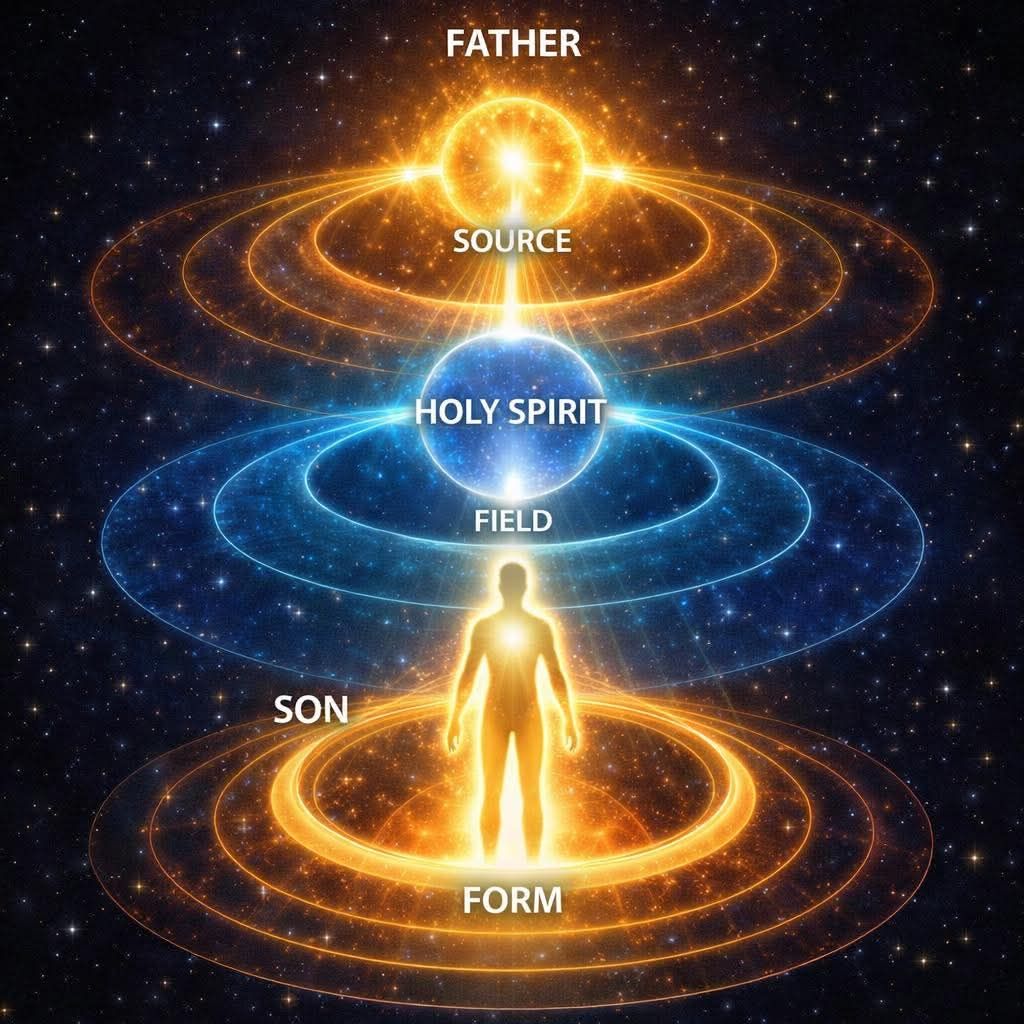
When most people speak about God, they speak in terms of singularity. God is one, sovereign, indivisible, existing beyond creation and governing it from above. And Scripture affirms this clearly and without ambiguity: “Hear, O Israel: The Lord our God, the Lord is one” (Deuteronomy 6:4). There is no division in Him, no fragmentation, no competing powers. God is One.
Yet when we begin to read the Bible not only for doctrine, but with careful attention to how God reveals Himself, something deeper begins to emerge. The oneness of God is not presented as stillness or isolation, but as something living, expressive, and active.
The opening lines of Genesis do not introduce a distant or abstract deity, but a God already in motion. “In the beginning God created the heaven and the earth… And the Spirit of God moved upon the face of the waters. And God said, Let there be light” (Genesis 1:1–3). Before creation takes form, there is already presence, movement, and expression. God is there as the origin, His Spirit is present and active, and His Word is spoken, bringing light into being. These are not separate acts occurring in sequence, but a single unfolding reality in which God creates through His own living expression.
This same pattern does not disappear as Scripture continues. It becomes clearer. When Jesus is baptized, the moment is not described in abstract theological language, but in a way that allows us to see what is otherwise difficult to articulate. “Jesus, when he was baptized, went up straightway out of the water… and he saw the Spirit of God descending like a dove… and lo a voice from heaven, saying, This is my beloved Son” (Matthew 3:16–17). In this single event, the Father speaks, the Son stands revealed, and the Spirit descends. Not as three separate beings acting independently, but as one reality expressed relationally.
John’s Gospel brings us even closer to understanding what is taking place. He does not begin with the birth of Jesus, but with the beginning itself. “In the beginning was the Word, and the Word was with God, and the Word was God. The same was in the beginning with God. All things were made by him” (John 1:1–3). Here, we are shown that creation itself comes into being through the Word. God does not remain hidden behind what He creates. He expresses Himself through it. The Word is not something external to God, but the very means by which God becomes knowable, visible, and manifest within creation.
And yet, this expression is never presented as lifeless or mechanical. Jesus makes this clear when He says, “It is the spirit that quickeneth… the words that I speak unto you, they are spirit, and they are life” (John 6:63). The Word is not merely spoken. It is carried, animated, and made alive through the Spirit. What proceeds from God does not remain distant. It moves, it breathes, it becomes life within those who receive it.
By the time we reach the writings of Paul, what was once revealed through narrative and lived experience is spoken with clarity. “But to us there is but one God, the Father, of whom are all things… and one Lord Jesus Christ, by whom are all things” (1 Corinthians 8:6). And again, “For by him were all things created… and by him all things consist” (Colossians 1:16–17). The language is precise. All things come from God, all things come through Christ, and all things are sustained within Him.
The author of Hebrews brings this into even sharper focus, describing the Son as “the brightness of his glory, and the express image of his person” (Hebrews 1:3). God is not only the source of reality. He is perfectly expressed within it. What is unseen becomes seen, not by departing from God, but by being revealed through Him.
Taken together, these passages are not presenting a contradiction to the oneness of God, but a deeper understanding of it. God is not only One in essence, but One in a way that is inherently expressive, relational, and knowable. His oneness is not static. It is living.
This is why Jesus can say, “At that day ye shall know that I am in my Father, and ye in me, and I in you” (John 14:20). And why Paul can declare, “For in him we live, and move, and have our being” (Acts 17:28). These are not poetic metaphors alone, but descriptions of a reality in which God is not separate from life, but the very ground of it.
What begins to emerge, if we are willing to see it, is that what we call the Father, the Son, and the Holy Spirit is not merely a doctrine to be accepted, but a pattern being revealed. A pattern in which God is the origin of all things, the expression through which all things are made known, and the living presence in which all things exist and are sustained.
This is why the Trinity has endured, even when it has been difficult to articulate. It is not an artificial construction, but the closest language Scripture provides to describe a reality that is already present from the beginning.
And as this begins to come into view, something even more profound starts to unfold, something that Scripture has been pointing to all along, yet is often overlooked.
This pattern is not only something we observe in God. It is something we participate in.
From the beginning, humanity is not described as separate from God’s nature, but as bearing His image. “So God created man in his own image, in the image of God created he him” (Genesis 1:27). This is not merely a statement about appearance or status, but about reflection, about correspondence between the Creator and what is created.
This becomes even clearer in the words of Paul, who tells us, “For in him we live, and move, and have our being” (Acts 17:28). Our existence is not outside of God, but within Him. We do not stand apart from this living reality. We are sustained by it, moving within it, participating in it moment by moment.
And Jesus speaks even more directly to this unity. “At that day ye shall know that I am in my Father, and ye in me, and I in you” (John 14:20). This is not the language of separation. It is the language of participation. What exists in God is not distant from us, but extended into our very being.
Even more striking are His words, “I have said, Ye are gods; and all of you are children of the most High” (Psalm 82:6, referenced in John 10:34). Not as a claim to independent divinity, but as a recognition that humanity carries something of the divine nature, something that originates in God, is sustained by God, and finds its fullest expression through alignment with Him.
Peter confirms this when he writes that we are called to become “partakers of the divine nature” (2 Peter 1:4). Not by becoming something separate from God, but by entering more fully into what we were created to reflect.
What this reveals is not that humanity replaces God, but that humanity is not external to Him. We are not observers of this structure. We are participants within it.
We come from the Source, we live within His presence, and we express, in part, what has been given to us.
So the Trinity is not only something to understand about God. It is something that reveals our place within reality itself.
We are not the Source, but we come from it. We are not the whole expression, but we participate in it. We are not the fullness of the Presence, but we live within it.
And in that sense, humanity is not outside the living structure of God, but a living expression within it.
 Grace Watcher Network
You must be logged in to post a comment.